
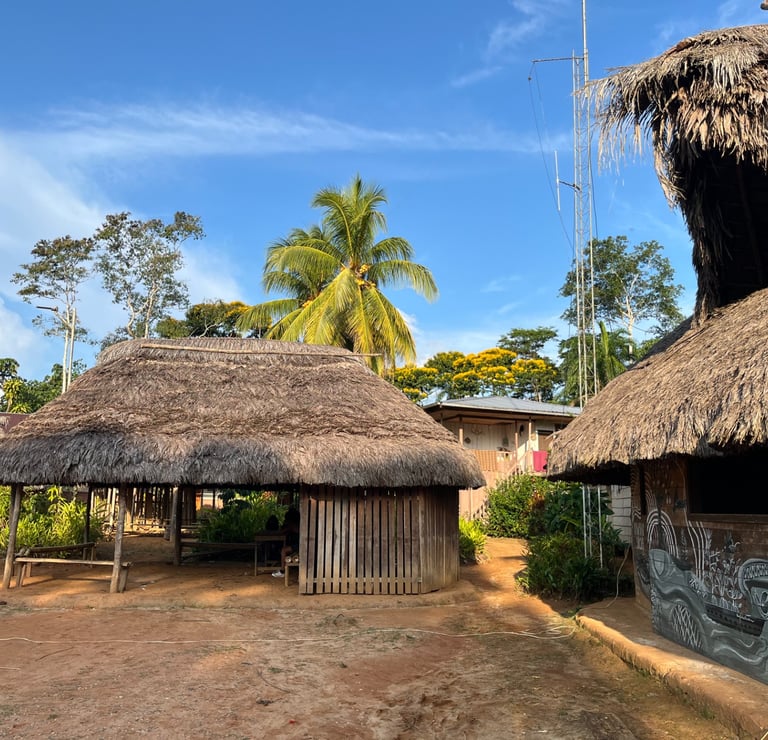
One of the few places in the Amazon that remains free from oil, mining, and roads. Protected by the Intelligent Guardians of Mother Earth.
Let me take you to Sarayaku.
Excursion to Sarayaku Territory – Ecuadorian Amazon
Why Sarayaku is a unique people
Some Amazonian communities have preserved their ancestral wisdom for millennia—and they have much to teach those coming from the Western world. It’s not only about their unwavering defense of Mother Earth. In Sarayaku, you can also learn how their community democracy works, what they prioritize in life, and how they relate to plants of power.
Their deep love and responsibility toward the forest have placed them at the forefront of nature’s defense. In 2012, they won a landmark case against the Ecuadorian government. The funds awarded as compensation were invested entirely in community projects—mainly the world’s first Indigenous community-owned airline.
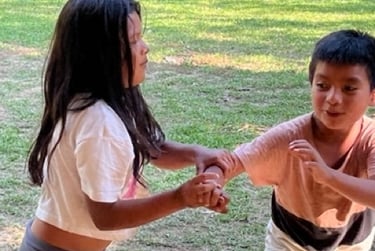
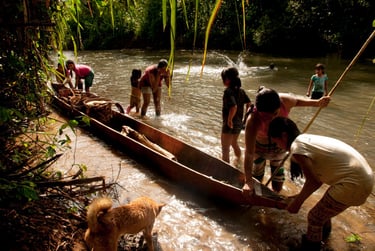
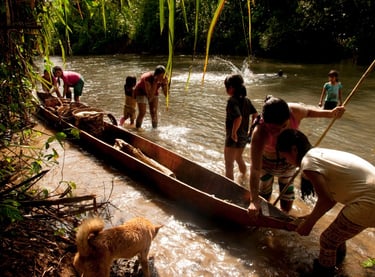
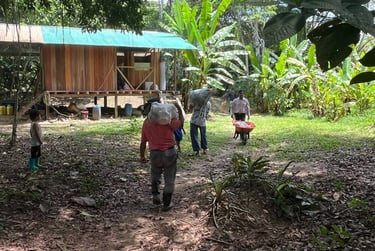
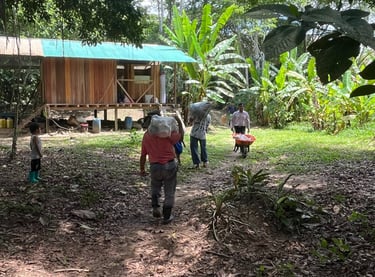
Sarayaku is a Kichwa people living deep in the Ecuadorian Amazon. They take pride in having maintained their original way of life, in spiritual harmony with Mother Earth.
On this visit, you will:
Meet firsthand one of the top Indigenous peoples in the World to sustain a strong, organized stance against extractivism.
Taste their extraordinary traditional food, prepared with natural ingredients from their gardens.
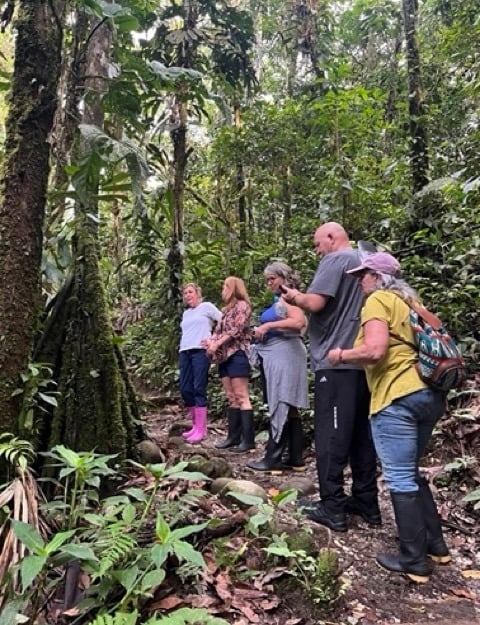
Walk through a jungle preserved like nowhere else—a journey with its original inhabitants that can shift your perspective forever.
Support their resistance and vision. Sharing their story, even on your social media and through conversations, is a real act of solidarity.
Contribute to a dignified economic alternative. Community-managed tourism creates well-paid local jobs. Plus, they are not employees; they are their own boss.
Learn about plants of power and their central role in Sarayaku’s worldview.
Take part in authentic experiences—nothing is staged for tourists. Tourism here is a mutual cultural exchange rooted in respect.
Join conversations with leaders about global challenges and their historical role as stewards of the rainforest.
Experience unforgettable canoe journeys through one of the few remaining oil-free, mining-free, industrial-agriculture-free zones in the entire Amazon.
Participate in journaling sessions in carefully chosen, meaningful places.
Discover their “Kawsak Sacha” (Living Forest) declaration—a clear articulation of their vision for the world: kawsaksacha.org/en
5 facts about the Sarayaku People
Unity against extractivism: Unlike other Indigenous groups divided over oil deals, Sarayaku stands almost unanimously against any form of extraction and unsustainable practices.
National leadership: They’ve played a key role in Ecuador’s Indigenous movement. Thanks to this collective effort, Ecuador’s Constitution recognizes the Rights of Nature, Food Sovereignty, and bans GMOs.
Community economy: They run a social bank and actively support young entrepreneurs building responsible, sustainable businesses.
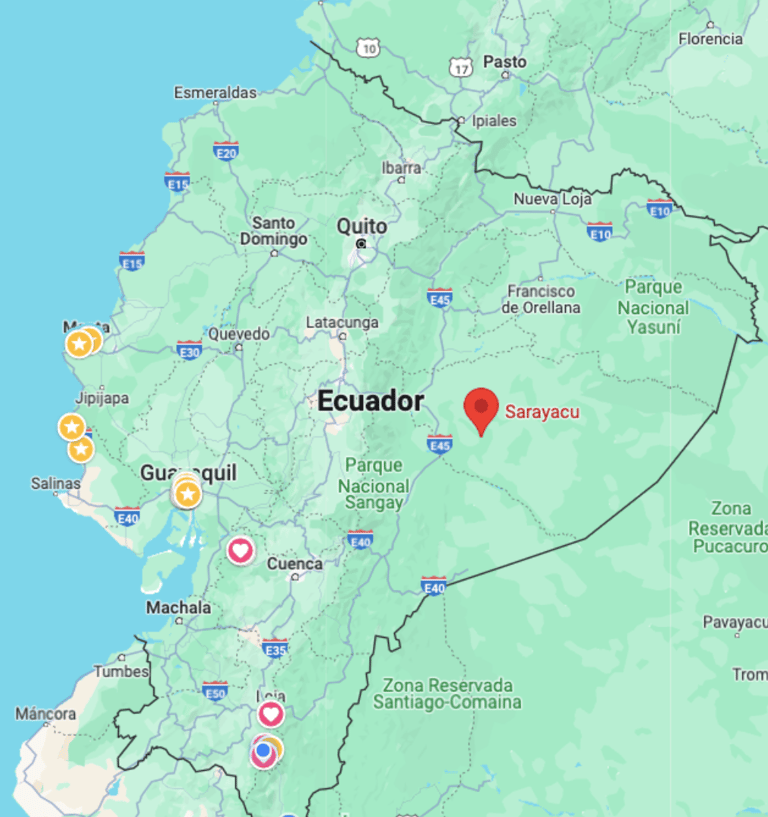
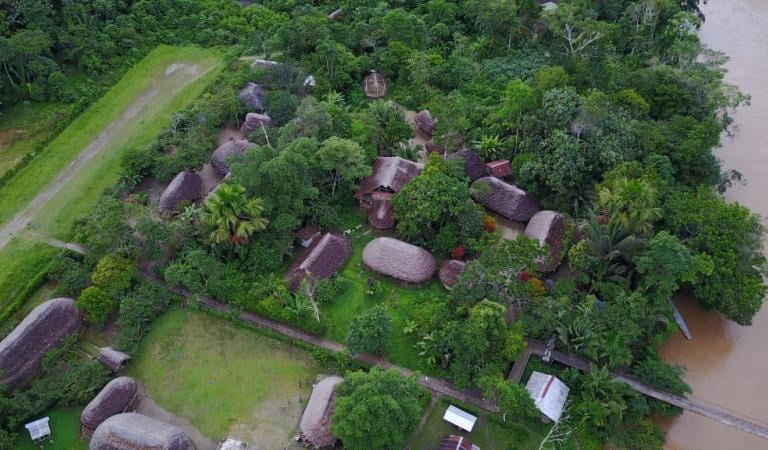
Intact territory: Their land spans 333,000 acres (slightly smaller than the Los Angeles metro area), and 95% is primary rainforest. They build only using their traditional architecture. And not because they are isolated. They are very well informed people.
Forest guardians: They maintain a team of Kaskirunas (forest guardians) who patrol against illegal logging—often with far greater integrity than state forest rangers.
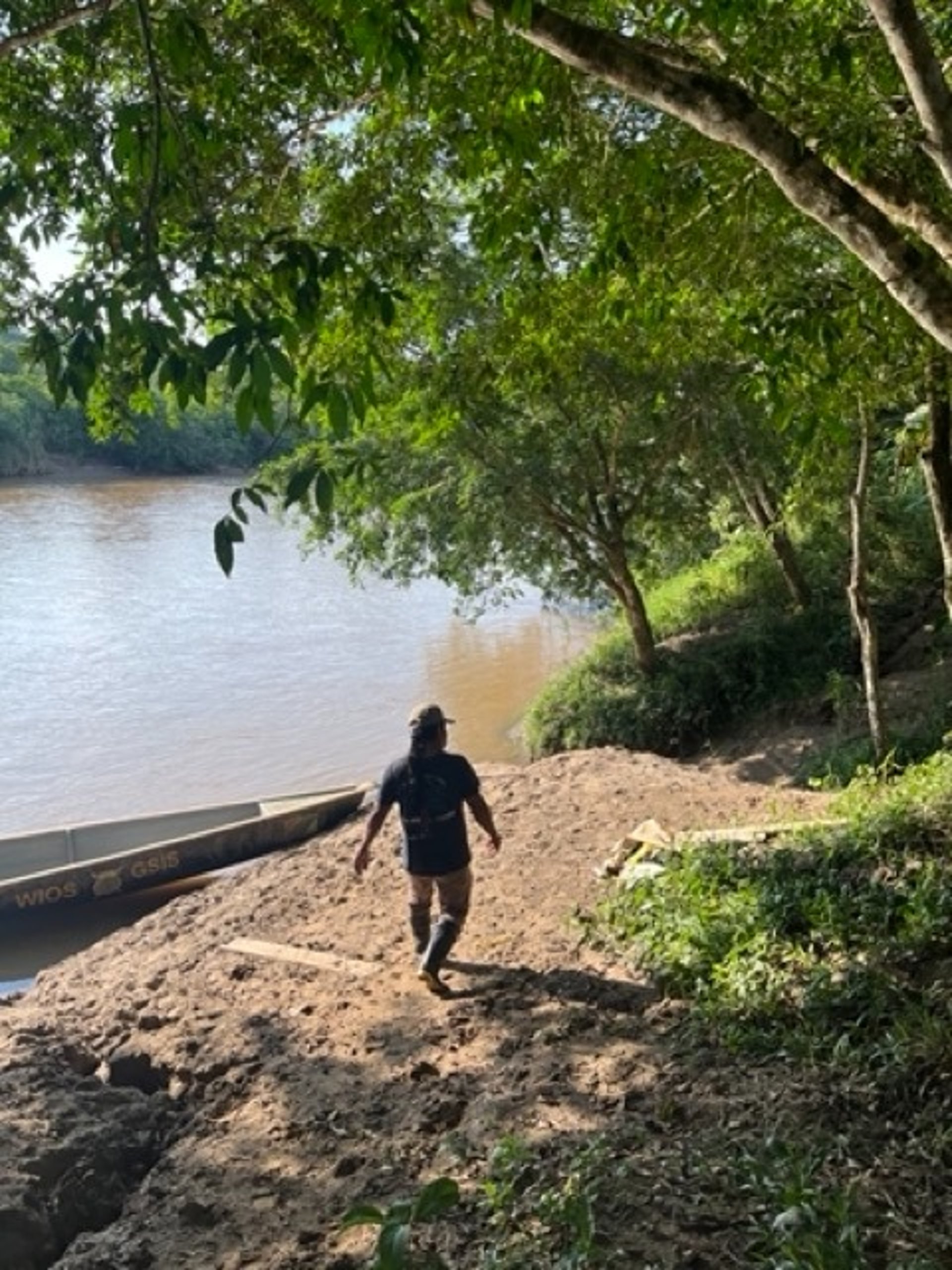
“The natural balance of the universe, the harmony of life, cultural continuity, the existence of living beings, and the persistence of Kawsak Sacha (Living Forest) depend on the preservation and transmission of the powers of the Jungle Protector Beings. It is also up to these Beings and the Yachak to maintain a relationship of respect and balance between humans and the living forest.”
— From the “Kawsak Sacha” Declaration, Sarayaku People
About me
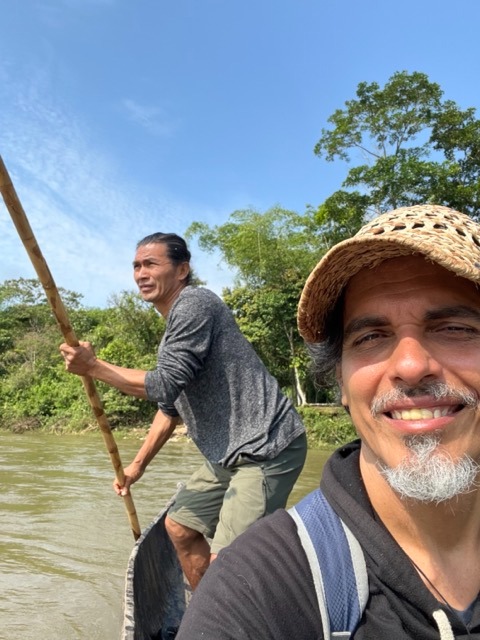
I am Riki, your host on this excursion. There’s a full section about me on this site.
What matters here is this: I’ve been to the Amazon more than 20 times and have extensive experience with plants of power, which has allowed me to deeply understand the Indigenous mindset.
But this trip is not focused on plants of power. It’s a cultural and natural immersion into a truly unique territory.
Much of my writing and guiding work has focused on Indigenous and conservation-based travel. I’m Ecuadorian and did college in the U.S.
Testimonials
The time spent with the Sarayaku community was the best experience of my life. I have traveled over a great part of the world and never felt the way I did and do - spiritually and emotionally. Meeting and discussions with the leaders of the community were a highlight where we learned about the ideals and goals that encompass the whole way of life of the Sarayaku - it was eye opening to this Westerner! We were welcomed and made to feel at home by everyone from the youngest children to the elders. This is a lifetime experience that will stay with you forever. I don't believe that the authenticity of the trip can be replicated anywhere else. I would give this 10 stars out of 5!
Cathleen Wojtanek
USA
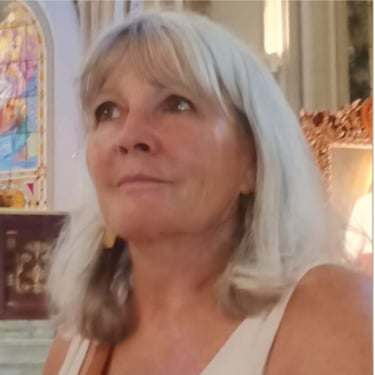
In general, this trip was an amazing experience! The hosts were fantastic, the food was incredible, and the people were some of the most wonderful humans I've ever met. Thanks for a great adventure Riki.
Rod Brown
USA
It was beautiful to experience people who come from their heart and who generously shared their sacred places with us.
I learned a lot about the people, their way of life honouring the living Jungle and their commitment to keep extraction off their land. This is a big challenge for them.
The accommodation and food was beyond my expectation which was a very pleasant surprise.
I can highly recommend this excursion for those people who want to have an authentic jungle experience and learn about the jungle and its people.
I left with a full heart and I am sure you will too.
Yvonne Pelletier Paul
CANADA
Itinerary
The way this itinerary is crafted is to seek a balance between your own space and liberty, and community activities with the rest of the group. Take into account this:
If you come from overseas, there will be one extra night in Quito when you arrive, and another one before you fly out. There is a $350 surcharge that covers transfers, lodging, food and transportation.
Alternatively, or if you live in Ecuador, our meeting point is Puyo on day 1.
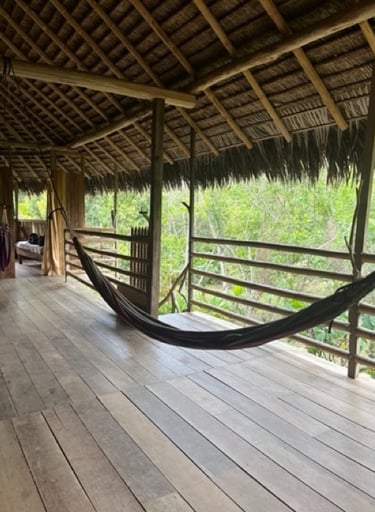
All activities are recommended but optional. You will always have the choice to stay at the cabin's hammocks reading or sharing with the locals. People are extremely friendly to visitors.
Day 1
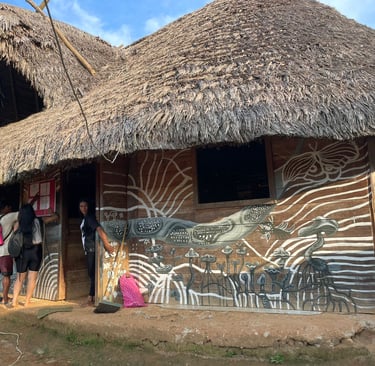
Arrival to Puyo after lunch, the gateway to the Amazon. In Puyo, we'll stay in a kichwa area where a beautiful community managed tourism project operates. We'll relax in our rooms and have dinner at 6. After dinner, we will do a fire in the place's maloka to discuss about our intentions for this trip. D
Day 2
After breakfast, we'll do a one hour slow trekking to a nearby waterfall, with a swimming pond right where the water falls. Lunch in the community. In the afternoon we will visit the kichwa village and interact in different ways with the locals. Dinner in the community. Depending on the weather, in the night we might do a canoe ride under the stars. Puyo is an extremely humid area. B/L/D
Day 3
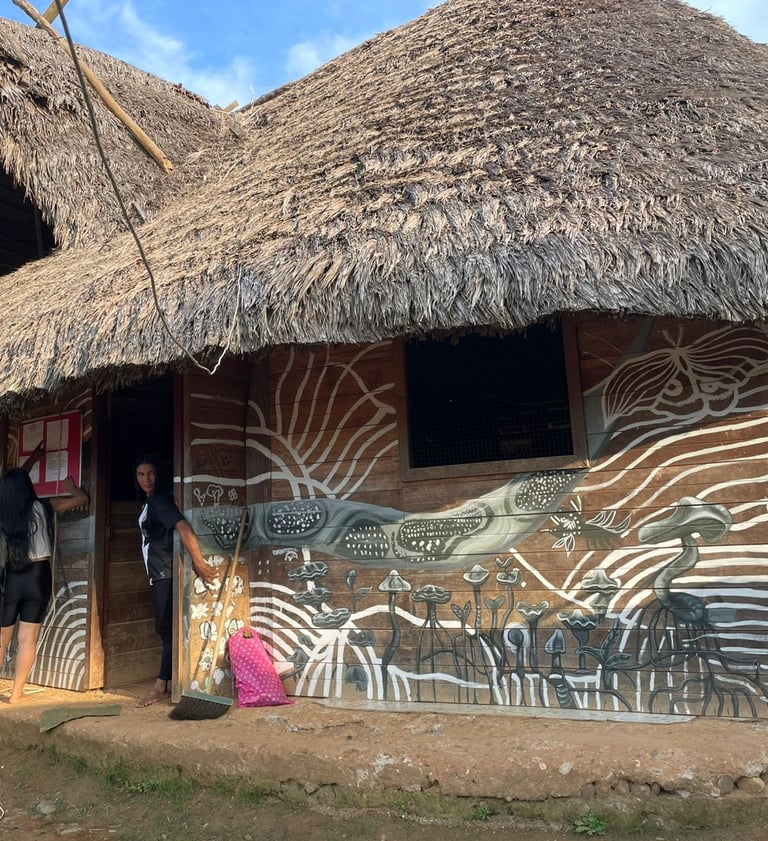
After breakfast, we head out to Sarayaku territory. First stop is Florasana, a garden that cultivates Amazon plants and makes personal use products. They also have a NGO that preserves the kichwa culture. Next stop is Tzasapi, the last port cars can reach. There we start a boat trip that will take us down current to Sarayaku territory (2 hours). We will have lunch in Huktu Rumi beach. Arrival to Sarayaku territory around 4pm. Accommodation in rustic cabins. After dinner, conversation with the local leaders about the purpose of the trip. B/L/D
Day 4
Trekking into the jungle with Sarayaku guides. Get to know God's pharmacy in the Amazon jungle and the many uses that they give to each vegatable species. Visit to the Botanical center Sacharuya, where they obtain all their medicinal plants. Demonstration of weaving of bags with palma fabrics. Visit to the Cerro del Mono, where we will have a panoramic view of their territory, and they will show their project Frontera de vida (Frontier of Life). Lunch at the community. Visit to their food gardens, harvesting for dinner. Dinner at the community. Tonight we'll go to bed early because tomorrow starts before sunrise. B/L/D
Day 5
At 4:30 am those of us who want to, can join a Guayusa ceremony. This is their traditional way to start the day around the fire before sunrise, talking about their dreams and their activities for the day. They will explain how guayusa was great to prevent Covid. River bath at sunrise. Breakfast.
Motorboat to Sarayakillo beach, to visit their sacred Ceiba tree that's more than 200 years old. Swim in small crystalline rivers, with local birds and animals. Lunch at the community. Afternoon of journaling. We will walk to a very special jungle spot chosen by the locals for contemplation. Take out your journal and let's share the old art of writing. Alternatively, during the afternoon there will be a demonstration of elaboration of ceramics, and, upon request, traditional face painting with jungle natural pigments. Dinner at the Community. Conversation with the local leaders to evaluate the visit and reach conclusions.. B/L/D
Day 6
After breakfast, we will visit the main square in Sarayaku, known as the Midday palace, in allusion to the prophecy that says that the Sarakaku people will resist till the end of times. We will visit their main buildings and the Tayak Wasi, Ancestral wisdom center and School. Lunch at the community. After lunch we depart. Arrival at Puyo at sunset. We will stay in a beautiful logde closer to the city of Puyo. In the night, conversation to assimilate the experiences. B/L/D
Day 7
In the morning, we'll have breakfast in the lodge and a short walk in the area. End of the trip around 10am. Local members go back to their hometowns. Those who come from overseas will be driven to Quito to spend the night there. B
Itinerary is subject to changes due it weather or circumstances out of our control. Please be flexible, as we will do everything to make the best of every moment.
Costs & How to reserve
Cost of excursion
USD 999 per person
Includes: all internal transport in Ecuador (starting in Puyo), all meals for 6 nights, drinking water, lodging, and all excursions and activities.
Most of the income is paid directly to the Kichwa host families.Not included: International flights, tips, snacks, crafts. Trip starts in Puyo. If you live in Ecuador, you have to get to Puyo to join the excursion (I will guide you on that). If you live overseas, you will either arrange all your movements upon arrival and movilization to Puyo. Or, i can take care of that (see next).
International travelers: +USD 350 for two additional nights in Quito (on arrival and departure), including all meals, airport transfers, and local transport.
Rooms are shared (2 people of the same gender).
Single room supplement: USD 200.
Bathrooms are shared between several rooms. Sarayakus don't offer the option of ensuite bathrooms.
How to reserve
You’ll fill out an intention form.
Within two business days, you’ll receive confirmation of availability.
Once confirmed, a non-refundable deposit of USD 500 is due within one week.
The remaining balance is due 30 days before departure.
Cancellation policy
Cancellations more than 60 days before departure: 100% refund.
Cancellations 30–60 days before departure: 50% refund.
In case of major natural disasters, global crises, or other force majeure events that prevent the trip, we’ll first try to reschedule. If impossible, you’ll receive a 100% refund.
It’s your responsibility to check passport validity and visa requirements for Ecuador. Official info: Ministry of Government – Entry Requirements
About Comfort
This is not a jungle lodge experience.
Getting in and out of canoes means stepping over mud and lifting your legs.
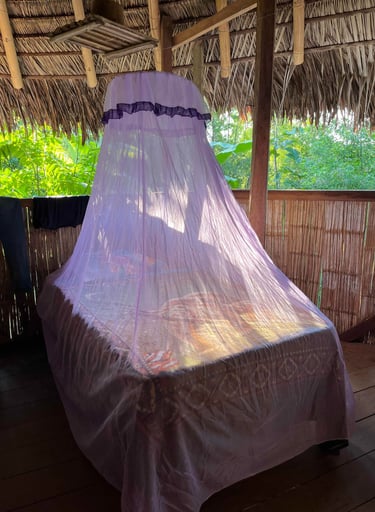
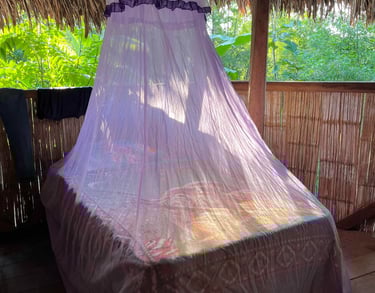
Accommodations are rustic: wooden walls may have small gaps where insects can enter (all beds have mosquito nets).
Bathrooms are very clean but usually outside of the. rooms. There are toilets and sinks—but no mirrors.
Sarayaku has only one hour of electricity per day.
The flipside is: no wifi pollution; total disconnection from civiliization, cozy rooms, clean spaces.
Medical emergencies
What if I have a medical emergency in the jungle?
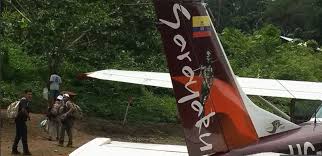
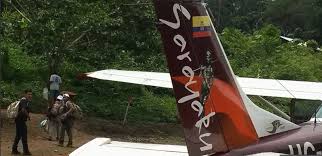
Sarayaku operates its own community airline. The airstrip is just 5 minutes by canoe from our cabins. In an emergency, you’ll be flown immediately to Puyo, which has equipped hospitals.
Who else will be
in the groups?
This is not a publicly advertised tour. Participants are either invited by me, referred by trusted contacts, or informed through aligned community networks.
Before confirming your place, I’ll ask you to complete a short questionnaire about your intentions. The goal is to ensure the group shares a common purpose: deep respect for this sanctuary of life and its courageous guardians.
About plants of power
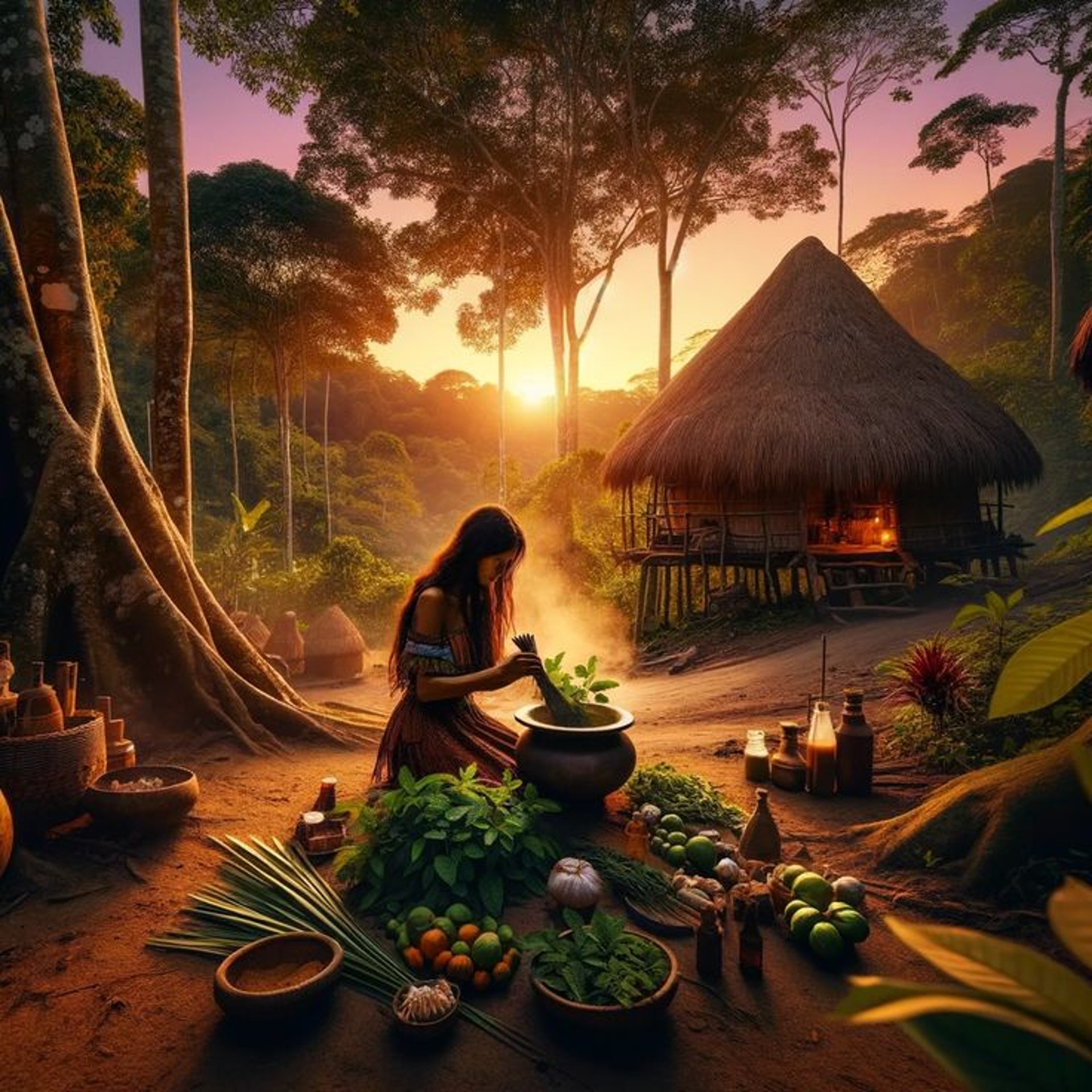
Ayahuasca (yahé) is a sacred plant of the Ecuadorian Amazon. It’s a powerful teacher that can open human consciousness to other dimensions. Its use has been heavily commercialized—but serious yachaks (healers) do not offer it as entertainment.
Ayahuasca is a living being that has helped Amazonian cultures preserve their vision of unity with Nature. If you’re coming from abroad, I recommend staying more than a week to adapt to the environment and diet. This helps prevent discomfort and allows you to receive the full depth of the experience.
If you feel called to work with ayahuasca, I’ll help you express your intention to the yachak. He will decide whether it’s appropriate for you during this journey. If not, you can program with them a visit on a latter date.
I can show you the Real Ecuador
Ecuador is a global leader in community-based tourism. It has a Special Law on Community Tourism and a national grassroots organization, led primarily by Indigenous leaders, that ensures tourism strengthens conservation, culture, and local empowerment.
Their challenge isn’t quality—it’s visibility. This kind of travel remains little known, yet its potential to shift consciousness is immense.
Until it becomes widely recognized, you’re invited to be among the few who discover one of South America’s best-kept secrets.
I lead small-group excursions to extraordinary places—for people who want an unforgettable journey with real people in real places, while directly supporting communities that protect life itself.
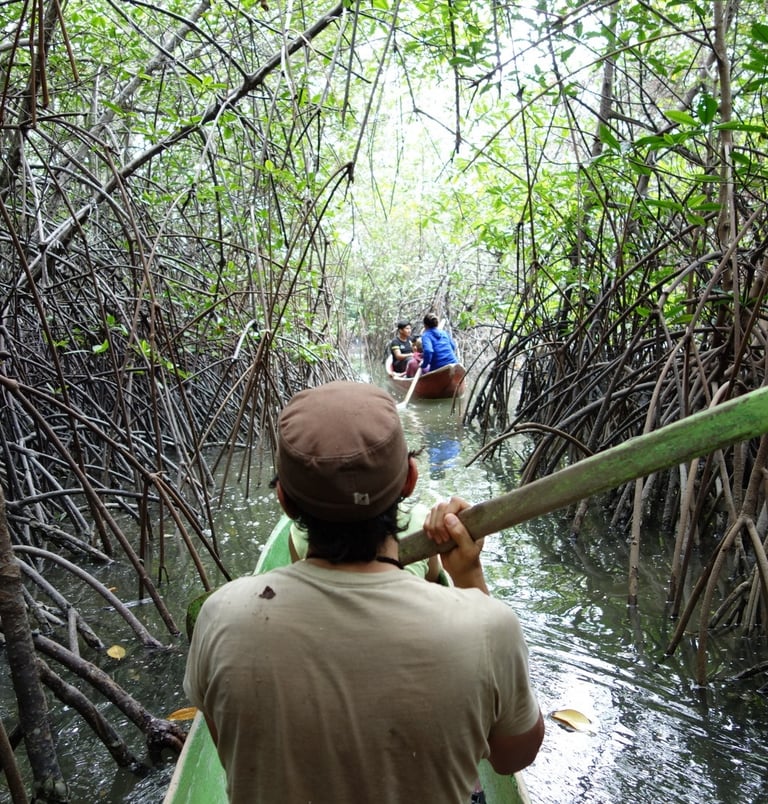
This is a unique opportunity to experience the Real Amazon Jungle with the locals, while supporting people who protect a landmark of Humanity.
You didn’t come this far to stop